The West and the Rest: Is Islam Inherently Violent? Part 2
When 9/11 happened, we were living in Tunisia. Our Muslim friends, neighbours and colleagues were shocked and were quick to offer their sympathy. This was nothing to do with Islam, they assured us. Visiting a couple of years later, we were met by a very different reaction. By then, the Americans, British and their allies had invaded Afghanistan and Iraq, many civilians had been killed as ‘collateral damage’ and news was breaking of torture perpetrated by American soldiers in Abu Ghraib prison. ‘The West had it coming to them’, was now the response. ‘You talk about human rights and democracy, but it is all just hypocrisy’.
On the same weekend as the horrific attack on a Jewish celebration at Bondi beach, Israel assassinated another Hamas leader in Gaza, despite a ceasefire being in place. Soon afterwards, Prime Minister Netanyahu claimed that the antisemitic attack in Sydney was caused by the Australian government’s recognition of the Palestinian State. At the same time, President Trump vowed ‘serious retaliation’ after three Americans were killed in Syria and, most recently, American forces entered Venezuela and kidnapped its President.
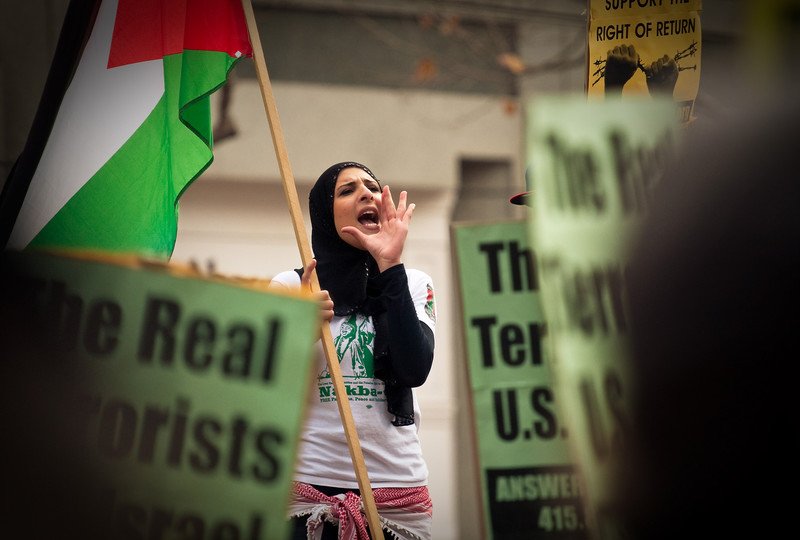
Of course, Venezuela is not a Muslim country, but these stories are typical of how the West and its allies use force, coercion and punishment to subjugate and bring into line any who oppose them. At the same time the West condemns other nations for doing very similar things. Maybe it is no wonder that at times it seems like ‘The Rest Hate the West’.[1] This blog explores some of the roots of Muslim violence which are ‘external’ to Islam, some of which lie at the feet of the Western powers. However, it starts by considering the ‘spiritual’ causes which some Christians believe to lie at the root of the violence.
Biblical prophecy
Could it be that Muslim violence today is rooted in prophecies given in the Bible many centuries ago? Some Christians think so. It is widely assumed that the Arabs, and hence Muhammad, are descended from Ishmael, the first son born to Abraham by a slave girl called Hagar. In the first book of the Bible, an angel prophesied to Hagar that her son will be ‘a wild donkey of a man’ whose ‘hand will be against everyone’ (Genesis 16:11-12). So, the argument runs, it is not surprising that the Arabs (excepting Christian Arabs?), and including all other Muslims, are violent people who fight everyone.[2]
What’s more, aficionados of the contemporary application of Biblical prophecies find signs of the hostility of Muslim nations towards Israel in passages such as Ezekiel chs 38-39. So, the Soviet Red Army, which used to be the chief antagonist in scenarios for the End Times’ Battle of Armageddon, in more recent apocalyptic writing is joined or even replaced by Muslim armies, especially from Persia (Iran).[3] These schemes sometimes speculate that Islam might be represented by one of the horns of the beast in the Book of Revelation or that Muhammad will prove to be the Antichrist. More about this in a later blog on the Israel-Palestine conflict. They believe that such theories explain any violence associated with Islam.
Finally, in a more general sense, many Christians see themselves as being in a spiritual conflict with the forces of darkness. The Apostle Paul says that ‘our struggle is not against flesh and blood, but against the rulers, against the authorities, against the powers of this dark world and against the spiritual forces of evil in the heavenly realms’ (Ephesians 6:12). For many, this includes the ‘spiritual powers behind Islam’.[4] This sense of conflict is only heightened for those Christians who do not believe that Allah is the God of the Bible and see Islam as being a demonic deception (see coming blog on Allah).
Of course, even if all these proposed Bible-based causes were indeed linked to Muslim violence today, it would not absolve individual perpetrators of personal responsibility, although the debate around divine sovereignty and human accountability is definitely one for another blog!
External roots of Muslim violence
Other Christian writers and teachers suspect rather more earthly causes of Muslim violence. These tend to be the Christians who take a conciliatory or eirenic approach towards Muslims. Following the line of argument in the introduction above, they suggest that the West is at least partly to blame for the rise in Muslim extremism in recent decades. Of course, they all strongly condemn terrorism and the indiscriminate use of violence. However, at the same time, they argue that the legacy of Western colonialism, the extent of global injustice and inequality, and Christian support for recent Western warmongering all play a part in stirring the hatred that leads to terrorist attacks.[5] This all sounds very woke to more confrontational Christians.
Colonial history and political power
From the 15th to the 20th century, Western powers colonised most of the Muslim-majority world from Morocco to Indonesia. Only modern-day Saudi Arabia, Iran, Turkey, and Afghanistan escaped this fate. Of course, colonisation and empire building have not been the unique preserve of the West. Although often unacknowledged, Muslim armies did a similar thing from the 7th century onwards and Russia and China also built and continue to pursue empires. However, for many Muslims the affront and helplessness of being subjugated by non-Muslims live on.
These feelings might be heightened by communal memory of difficult events in colonial history. For instance, the French annexation of Algeria and the subsequent war of independence were particularly brutal, as was the Italian occupation of Libya. However, it is the sense, shared by many previously colonised nations, that the West grew rich by exploiting the manpower and natural resources of those nations which continues to rankle. There is a belief that it was the colonial era that led to the problems and inequalities that still exist in the world today.
For instance, the international borders and governments that the West created at the end of their colonial rules still cause trouble today. Territories which prior to colonisation had been loosely governed under empire became nation states. The borders of these nations were drawn to benefit the Western powers and not the local populations. They cut through tribal territories in West Africa and set Sunnis, Shi‘a and Christians on a collision course in Lebanon. Western-appointed rulers were imposed or supported for economic advantage – not least to secure access to oil and trade routes. Indeed, some Christians suspect that recent Western wars in the Middle East have been as much about oil as they have been about promoting democracy and freedom (a feeling which Trump’s recent actions in Venezuela will have done nothing to assuage).
These Christians call into doubt the West’s commitment to democracy and suggest that the West’s ambiguous track record on it has fuelled the anger of many Muslims. The governments established in colonised nations following the post-WWII independence movements often evolved into autocratic dictatorships installed by foreign powers and corrupt rulers still oppress their peoples today with the connivance of the West. This includes nominally Muslim dictators imprisoning and even torturing supporters of Islamist movements. For many Muslims and others, including my Tunisia friends, this Western support for undemocratic regimes gives the lie to Western calls for the establishment of democracy and human rights around the world. The cancellation of elections in Algeria and Palestine after victories for the Islamic Salvation Front (FIS) and Hamas respectively suggested to them that the West only wants democracy if the results are in its own interests. Western support for General Sisi’s 2013 countercoup to topple the elected Muslim Brotherhood government in Egypt further confirmed this.
Of course, these affairs are complex and autocratic governments always have their supporters – both Muslim and Christian. For instance, some Christians felt that the remaining Christian minority population in Syria would be better protected by the repressive Assad regime, mainly consisting of powerful figures from the minority Alawite community, than they would by a radical Islamist government.[6] Illustrating this, the patriarchs of the Orthodox and Catholic churches in Syria condemned 2018 Western missile strikes on the Syrian regime as ‘unjust aggression (that) encourages the terrorist organizations’ fighting for Assad’s downfall. The future for Syria’s Christians under Islamist rule remains to be seen.
Many Christians, like the Syrian patriarchs, believe the resort to force to be counterproductive. They believe that the wars which the West has fought in the Middle East over the past two and a half decades, often with vocal Christian support, have been disastrous for the image of Christianity in the eyes of Muslims. They see the invasions of Afghanistan and Iraq with their subsequent humiliating withdrawals and disastrous aftermaths as being particular drivers of Muslim terrorism and strained Christian-Muslim relations.
Hypocrisy and injustice
However, it is not only Western political and military power that create distrust. According to Pearse, the Western nations are also ‘the ultimate cultural imperialists’ (p44) wielding huge influence through their power over commerce, media, the internet, the arts, fashion and even sport. At the same time, the West is seen as being immoral, corrupt and secularising, destroying other cultures, including traditional Muslim cultures.
It also fails to hold itself to the same standards which it expects of other nations. Soldiers accused of abuses against civilians and prisoners are acquitted. The killing of civilians is not labelled as terrorism but ‘collateral damage’. The failure to enforce United Nations resolutions, especially against Israel, whilst other nations are heavily sanctioned, also suggests a two-tier international order. This is only enhanced by the USA’s refusal to submit itself to the International Criminal Court (ICC) and the disregard of ICC verdicts by Western allies. Its recent escalating contempt for international law and order under President Trump will only further fuel the anger of The Rest.
This is particularly the case around the situation in Israel-Palestine and the war in Gaza. Plenty of Christian authors see this as the biggest cause of Muslim anger against the West and a major driver of the terrorism committed by radical Muslim groups. For instance, in 2010 Gregorios III, the Melkite Patriarch of Antioch and All the East, wrote to Western leaders and warned them that ‘Christians, from lay-people to Patriarchs, together with Muslims in Arab countries are wondering why sanctions can be imposed upon a number of countries such as Syria, Iraq, and Iran, but never any that affect Israel’. Before that in 2008, Anglican Bishop Bill Musk wrote that ‘solving the Palestinian/Israeli issue is a far surer way to protect America and the West from Islamist suicide attackers than ratcheting up a possible pursuit of ‘evil’ in … Afghanistan and Iraq’.[7]
In all the above, a recurring theme for Muslims – and others – is the hypocrisy of the West, as evidenced by my former colleagues and neighbours in Tunisia. Indeed, ‘hypocrites’ is a common label (often occurring in the Qur’an) used by Muslim radicals to refer to the Western powers. For some, it is enough to drive them to acts of violence and terrorism perpetrated in the name of their religious identity as a response to political injustice .
Going soft on Islam?
Of course, many of these arguments are viewed as being weak and even dangerous by those Christians who want to confront Islam and see Muslims as enemies and an existential threat. They advocate a robust, even military, response to terrorism, the nuclear armament of Muslim-majority nations or any seeming expansion of Islam. For them eirenic Christians criticising the West amounts to ‘going soft on Islam’.[8] They see agonising over colonialism as being part of a ‘woke’ agenda, which fails to recognise the presumed good intentions and humanitarian achievements of the Western nations in that era. Recently, for instance, I was talking to a Kenyan Christian who recognised that, whilst many Kenyans have negative memories of British rule, they are grateful that virtually all of the countries educational and medical institutions were founded by Christians.
So, Christian apologies for everything from the Crusades to the Gulf War are viewed by some with suspicion. ‘Apologies’, writes Patrick Sookhdeo, are ‘at best useless’ and at worst ‘send inappropriate cultural signals and can do more harm than good in that they reinforce the Muslims’ sense of grievance against Christians’.[9] So, some Christians suggest that ‘if apologies are to be extended, it is important that this be done in a framework of mutual (i.e. Christian and Muslim) acknowledgement of error and excess, and shared repentance’.[10]
Choices
So, is Islam inherently violent according to Christians? Just what ‘inherent’ means will be the topic of a later blog looking at how different Christians answer the question ‘What is Islam?’. Does Islam consist in its texts? Or is it a social construction? For now, the issue of the roots of violence is obviously a complex question, despite some of the simplistic answers given. Clearly, as we have seen in these two blogs, there is a big difference of opinion amongst Christians. Some place the ‘blame’ squarely on Islam, its texts and traditions. Others see the causes at least partially lying in the West and historical factors.
At the end of the day, all religions have to be interpreted and applied. All the major religions have peaceful followers, even if their texts are sometimes susceptible to justifying violence. This is true of Christianity as well as of Islam. At the same time, all religions can be used for the cause of communitarian identity politics. Most think of Buddhism as a peaceful religion and yet today there are Buddhist monks with extreme nationalist views that embrace and encourage violence. Extreme Hindu nationalism is on the rise in India. And for Christians too, it is not just far away, ‘over there’. More than ever, if you are a Christian, there are probably people in your country, your community, your denomination – even your church congregation – who hold radically opposed ideas on nationalism, patriotism, war and the justification of violence. Many Christians today, especially in the West, are sounding more and more as though they adhere to a martial religion rather than following the Prince of Peace (Isaiah 9:6).
And Islam is not immune. However much the majority of Muslims want it to be a religion of peace, there are others who will use it for violent, imperial purposes (see Blog #9). The question is whether Christians will support those Muslims who want to find eirenic interpretations and work for peaceful coexistence or whether they will insist that the violent are the only true Muslims – and escalate the conflict further.
Christians and Muslims – and even Christians with different views – need to talk to one another openly about the approaches and responses outlined in these two blogs. Such discussions are never easy. If they are conducted in an accusatory, polemical atmosphere, then they will certainly only further close minds and entrench positions. Rather, what is needed is an inquisitive approach and a desire to understand, as well as to communicate one’s own position. If this happens, then there is a chance of developing empathy for others who are struggling with the increasingly prevalent martial interpretations of the two faiths in the world today.
Photo credit: Romain Guy https://www.arabmediasociety.com/wp-content/uploads/2025/07/palestine.jpeg
Notes
[1] Meic Pearse. 2004. Why the Rest Hates the West: understanding the roots of global rage, Downers Grove, IL, Inter-Varsity Press.
[2] This translation is from the New International Version. Tony Maalouf gives a rather more positive interpretation and explanation in Arabs in the Shadow of Israel: the unfolding of God's prophetic plan for Ishmael's line, Grand Rapids, MI, Kregel Publications (2003). The wild donkey was a respected animal with positive traits and the reference to his hand was to do with freedom and independence.
[3] See for instance the later writings of Hal Lindsey and John Hagee.
[4] George Otis’ 1991 ‘The Last of the Giants: Lifting the Veil on Islam and the End Times’ (Tarrytown, NY, Chosen Books) is a classic and widely-read example.
[5] For instance, Colin Chapman. 2005. ‘Islamic Terrorism’: is there a Christian response?, Cambridge, Grove Books, 4.
[6] See for example see the book by Anglican vicar Andrew Ashdown Christian-Muslim Relations in Syria: historic and contemporary religious dynamics in a changing context, Milton Park, Abingdon, Oxon ; New York, Ny, Routledge. 2021.
[7] Bill Musk. 2008. The Certainty Trap: can Christians and Muslims afford the luxury of fundamentalism?, Pasadena, CA, William Carey, 227.
[8] This was an early phrase used by Colin Chapman in his 1989 article ‘Going Soft on Islam? Reflections on some Evangelical Responses to Islam’. Vox Evangelica, xix, 7-31.
[9] Patrick Sookhdeo. 2009. The Challenge of Islam to the Church and Its Mission, McLean, VA, Isaac Publishing, 28 & 89 (CHECK) new edition.
[10] Peter Riddell & Peter Cotterell. 2003. Islam in Conflict: past, present and future, Leicester, Inter-Varisty Press, 102.